adapt - health care tablet app (hackathon)
Improving health professionals’ experiences during COVID-19
Overview
The UW DubsTech Protothon was a design hackathon held in May 2020. This year’s prompt was to design a tablet application that allows health professionals to seamlessly check-in and communicate with patients during the COVID19 pandemic.
PROJECT INFORMATION
Timeline: May 2020
Duration: 36 Hours
My Role: UX Designer/Researcher
Team: 5 members
Tools: Pen & Pencil, Figma, Photoshop
MY CONTRIBUTions
Research, Sketches, Wireframes, Competitive Analysis, User Journey, Journey Mapping, Hi-Fidelity Prototype
Problem
Hospitals are facing a rapid influx of incoming patients to be identified, isolated, tested or admitted for COVID-19. Due to the overwhelming amount of paperwork, front-line healthcare workers aren’t able to spend enough time providing care to their patients .
GOAL
Design a tablet application that allows nurses to seamlessly check-in and communicate with patients to reduce administrative overhead.
design process


USER INTERVIEWS
In a very short time period, our team was able to find and interview 6 different frontline workers (ER Doctors, Nurses, Pharmacists). We conducted 30 minute sessions, asking about the overall experience and specific difficulties in their workflow during COVID19.
Key pain points:
Overbooking rooms/beds
Lack of realtime updates on COVID19
Collecting patient information is time consuming
Difficulty communicating with patients and staff
Competitive & comparative analysis
In addition to conducting interviews, our team analyzed various platforms to discover common trends in existing solutions.
Key trends
Dashboards
Minimal text for quick viewing/bullet pointing
Charts (pie charts/bar graphs)
Visuals with numbers

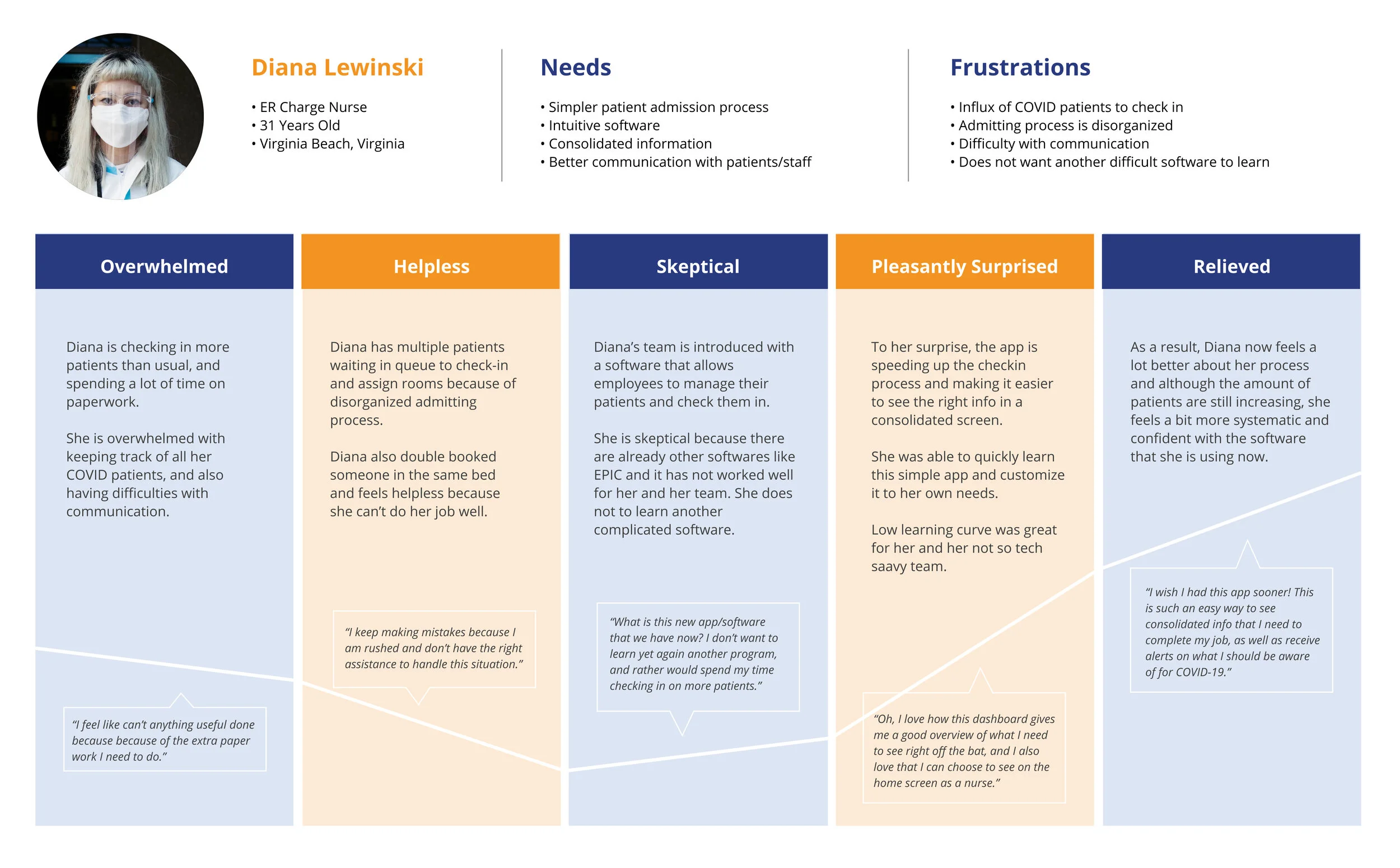
persona & journey map
Based on the insights that our researchers gathered, our team was able to come up with a persona and journey map. This step was also
crucial in quickly onboarding our audience into the shoes of Diana (our persona), and to better understand her pain points/needs.
Group IDEATION (Design Studio)
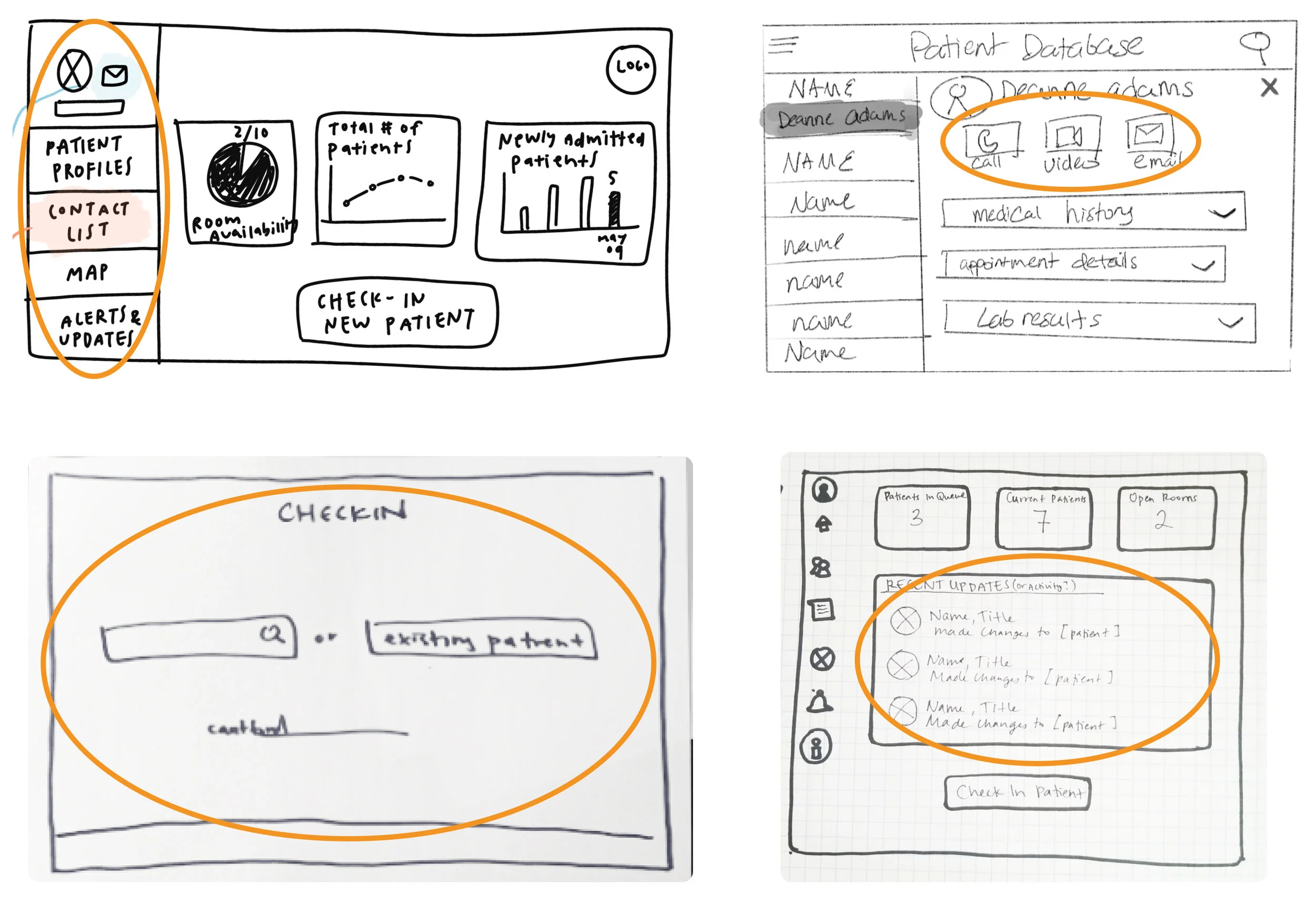
With the time constraint of the hackathon, our team benefitted from a group ideation session. We were able to consolidate some of the elements from each person’s sketch in order to address Diana’s problems through design.
Wireframes
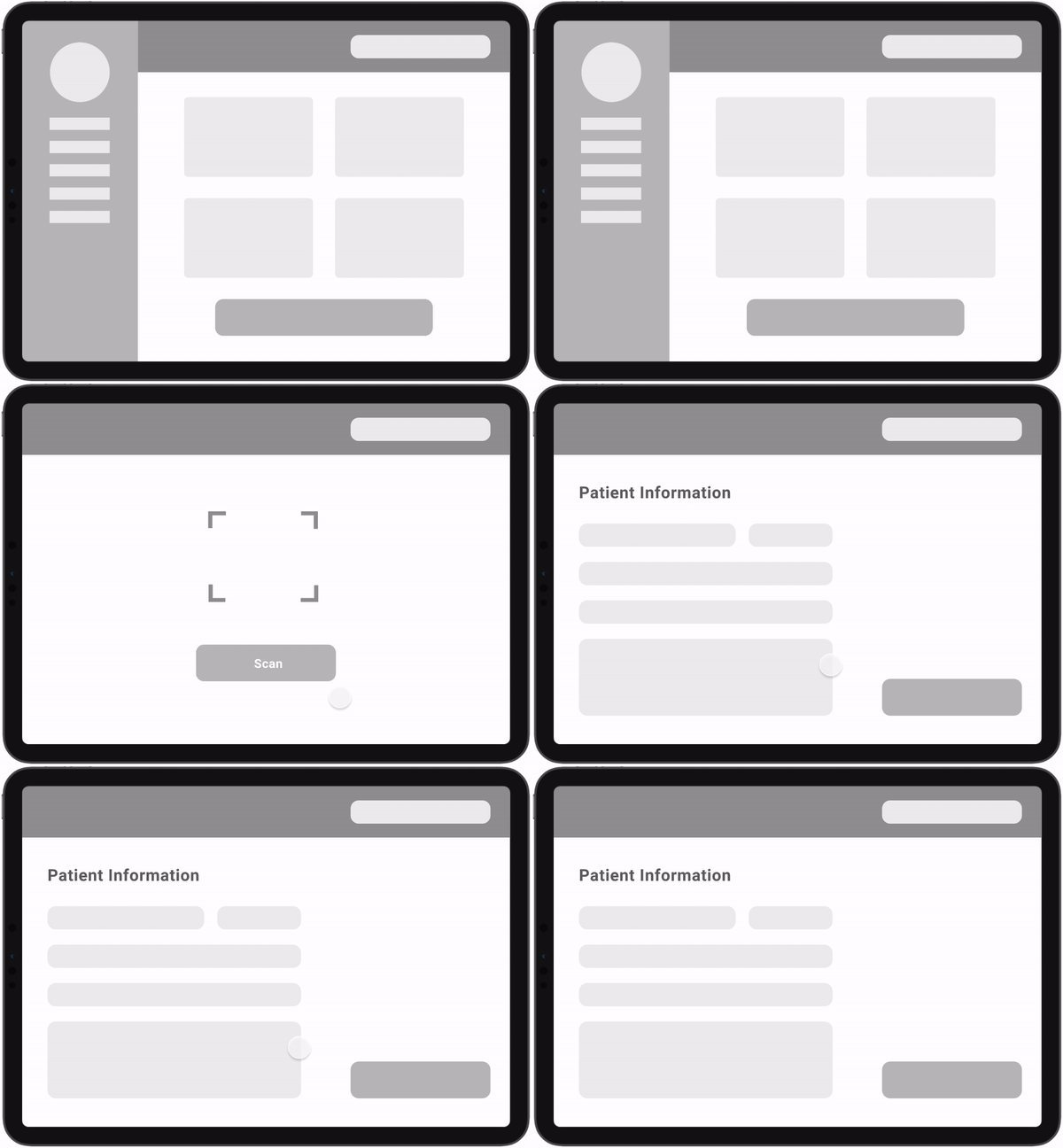
By leveraging the design elements we agreed upon as a team, we created wireframes.
key design elements
Dashboard
Call/Video option with patients
Check-in process as existing/new patient
Easy access navigation
design solutions
Assigning rooms & BEds
QR code check-in
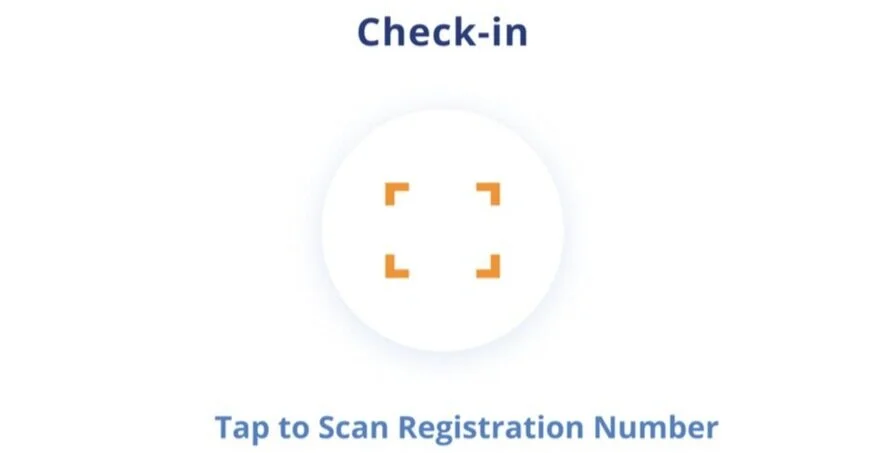
With the traffic in checking in, patients are now able to register online and simply scan their web generated QR code for nurses to access information.
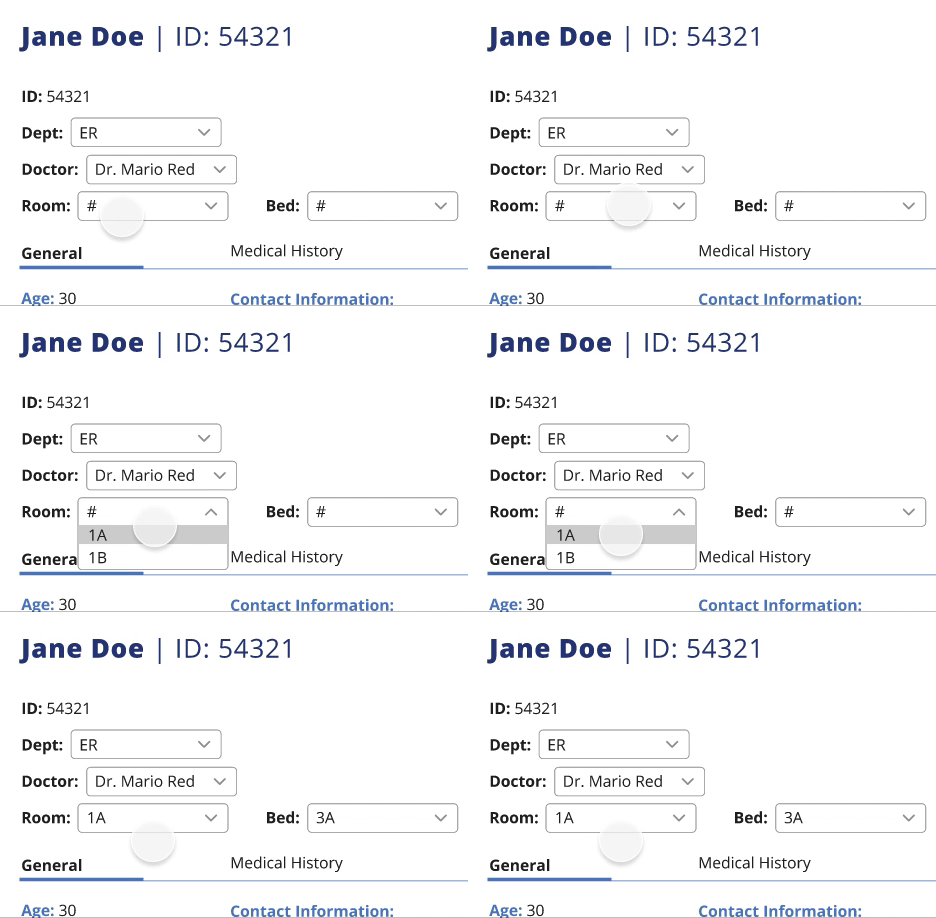
To address the issue of rooms and beds being overbooked, we created an easy access interface where doctors and nurses can utilize a dropdown.
dashboard
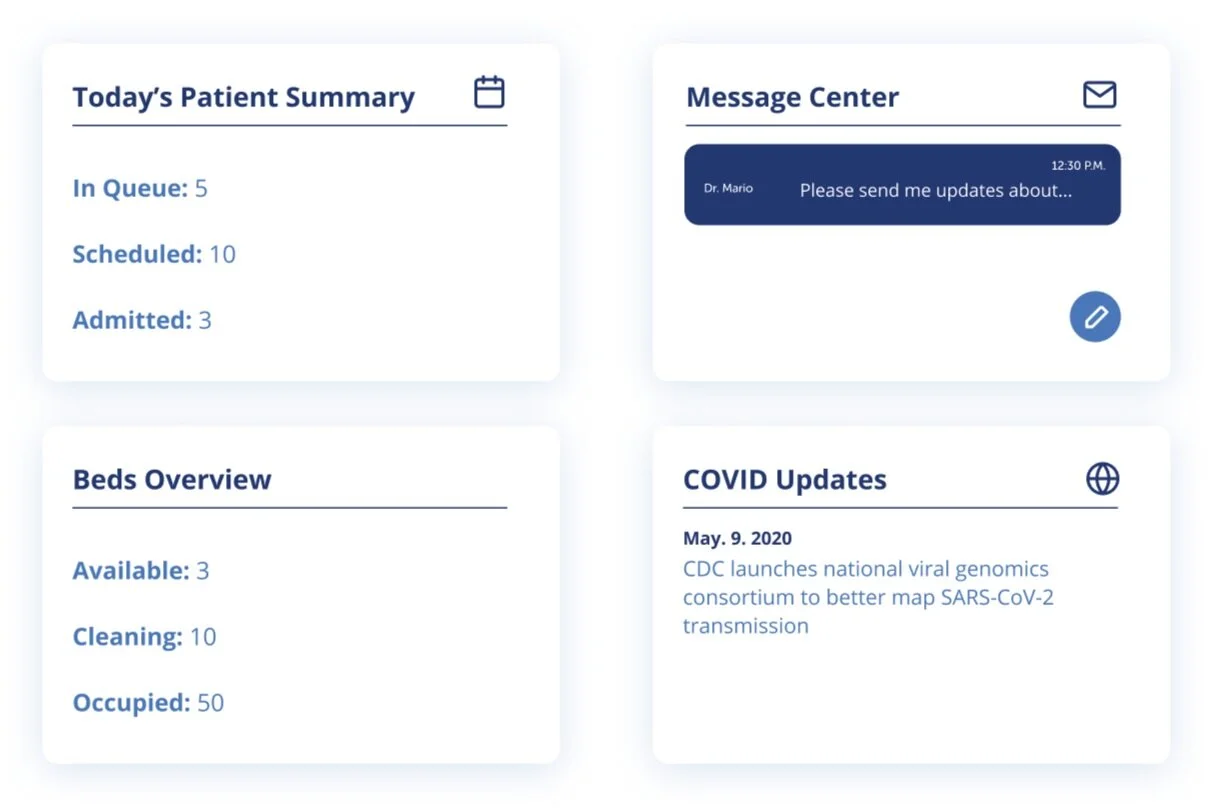
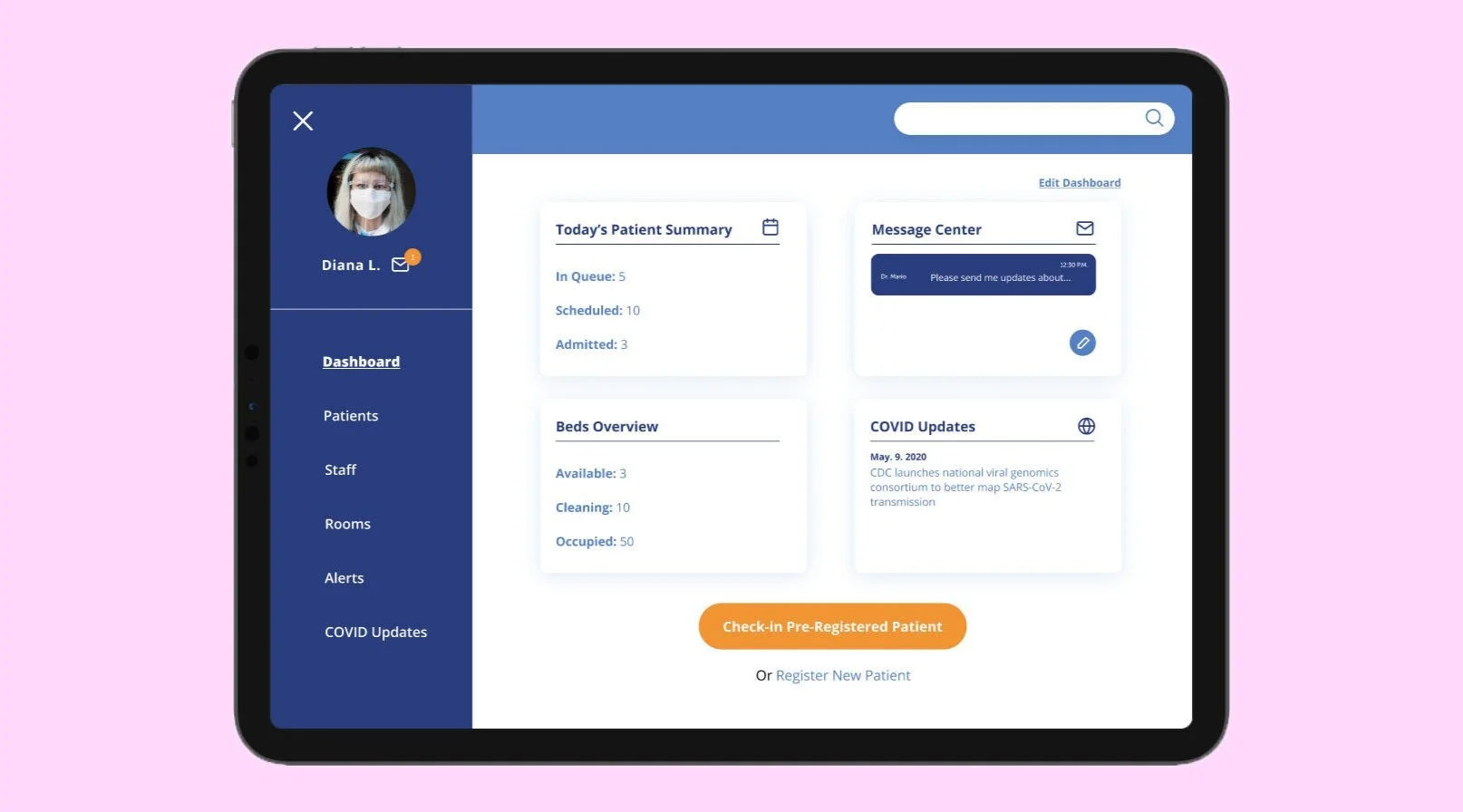
Dashboard provides a cohesive interface to view patients in the queue, bed availability, recent messages, and updates regarding COVID-19.
phone & video

“Communicating with patients is difficult to begin with. Due to social distancing restrictions, it’s been even harder to have to speak at a distance, especially with masks.” - ER DoctorTo address these pain points, we were able to implement a call and video function for a frictionless patient-to-doctor communication through the comfort of a screen.
final prototype
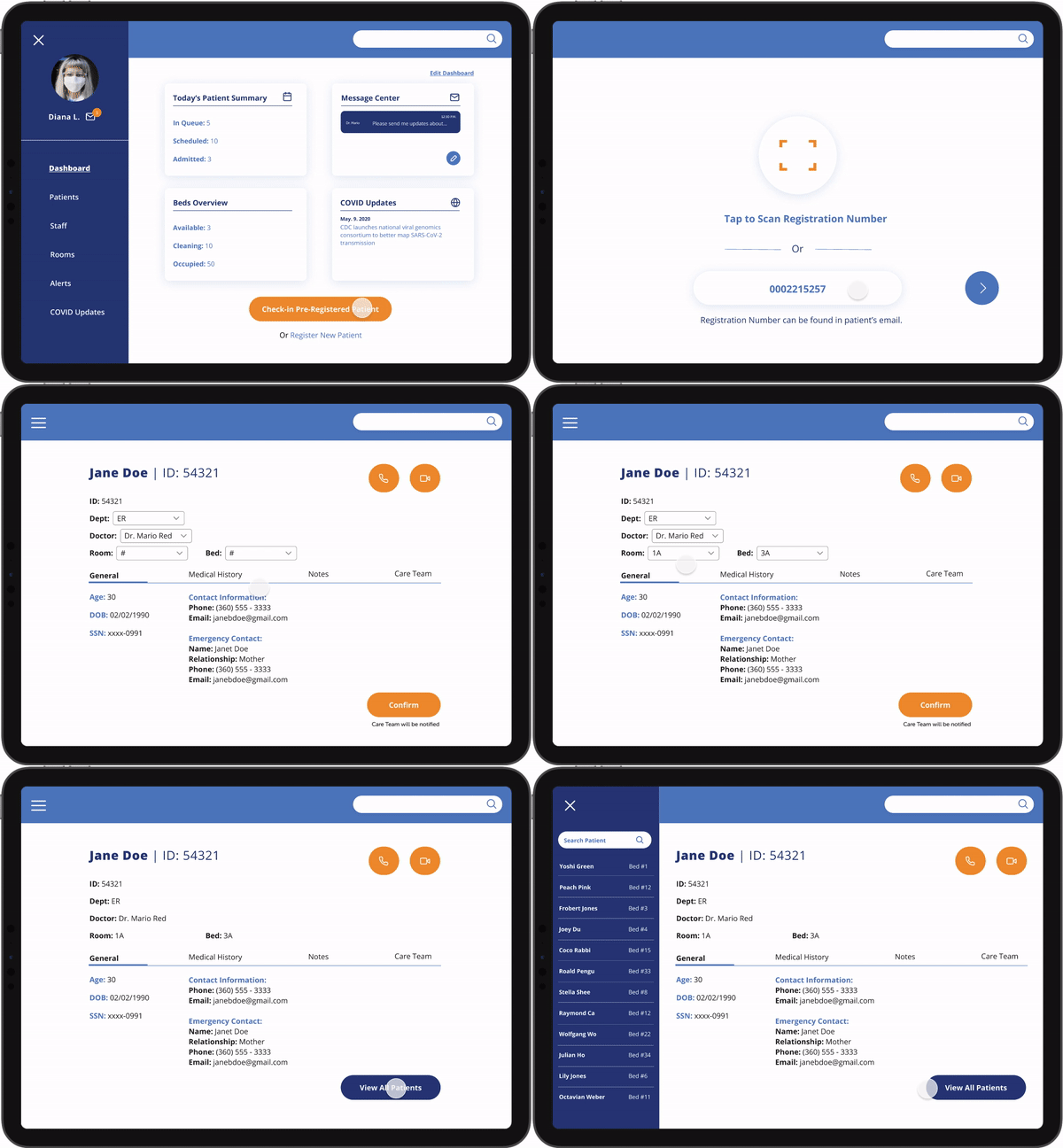
results
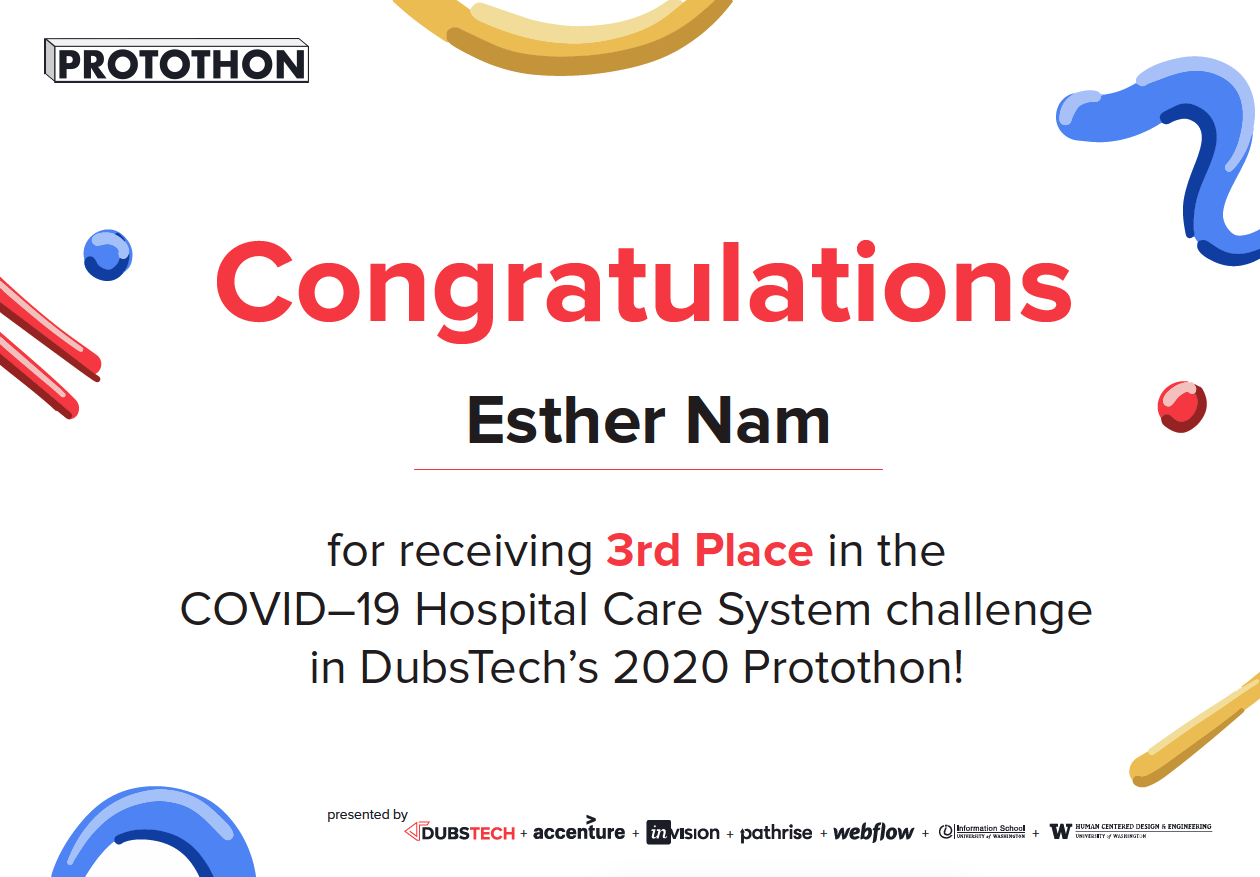
Our team placed 3rd place out of 60 participating teams. Our project was judged by 11 industry professionals from companies including Facebook, Amazon, and Accenture.
reflections
As my first hackathon, it was quite challenging to Remote communication/hackathon
Our approach especially stood out due to our extensive research and interviews.
communication/splitting up/ Importance of having a PM
know how to disagree and move on
set strict time line / timeblock / checkin
looking at other team’s work was learning lesson